

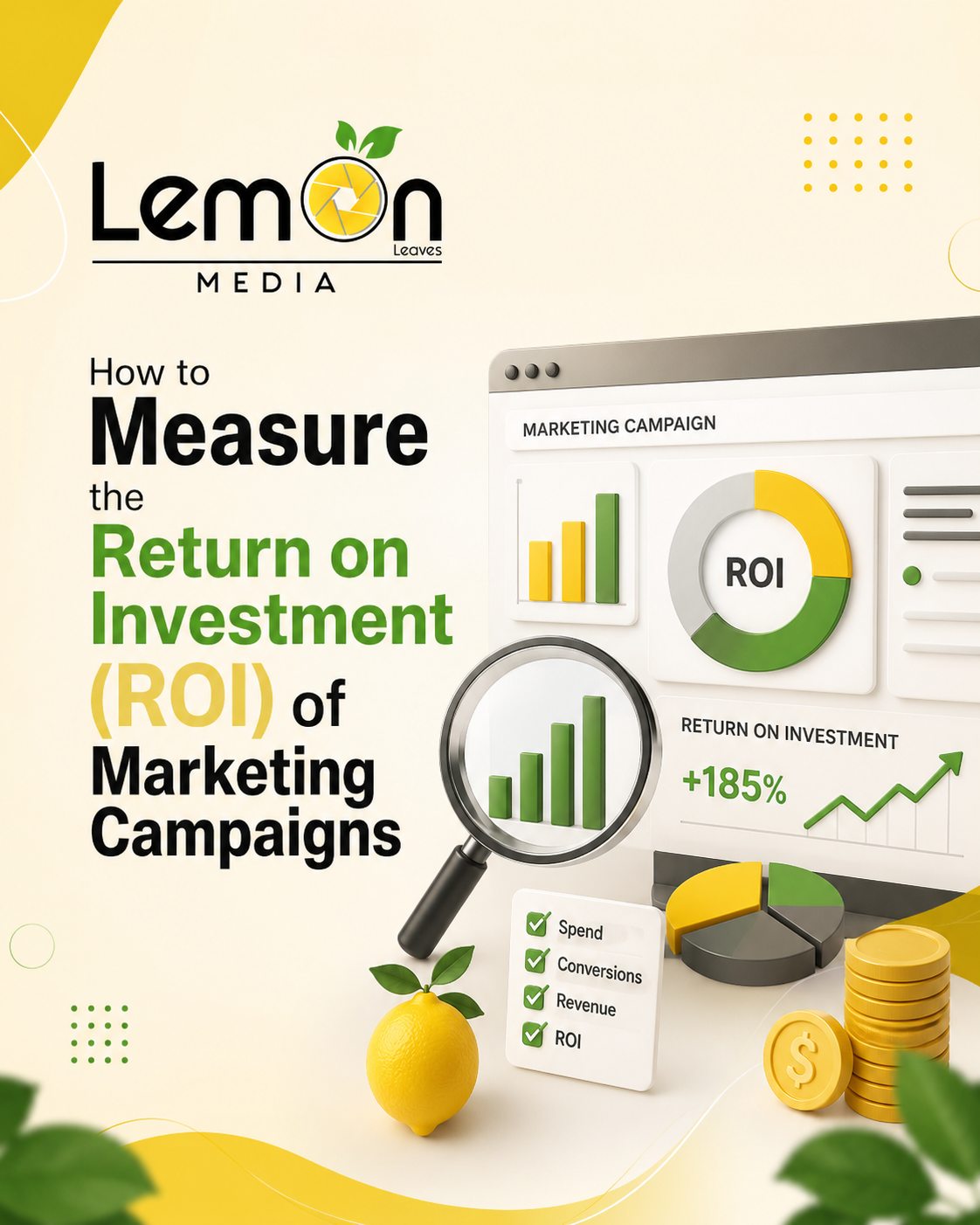
Return on Investment (ROI) is one of the most important metrics that helps businesses evaluate the effectiveness of their marketing efforts and understand how much revenue they are generating compared to their spending.
What Is Marketing ROI?
Marketing ROI measures the financial return generated from marketing activities compared to the amount invested in those campaigns.
It helps businesses answer important questions:
- Are marketing campaigns generating profit?
- Which channels deliver the best results?
- Where should the marketing budget be allocated?
- How can future campaigns be improved?
By analyzing ROI, companies can focus their resources on strategies that create real business growth.
Why Is Measuring Marketing ROI Important?
1. Understanding Campaign Performance
Measuring ROI allows businesses to identify which campaigns are successful and which ones need improvement. Instead of making decisions based on assumptions, companies can rely on real data.
2. Optimizing Marketing Budgets
When businesses understand which strategies provide the highest returns, they can allocate their budgets more effectively and avoid spending money on ineffective channels.
3. Improving Future Strategies
ROI analysis provides valuable insights into customer behavior, campaign performance, and market trends. These insights help marketers create more effective campaigns in the future.
4. Proving Marketing Value
Marketing is an investment, not just an expense. Measuring ROI helps demonstrate how digital marketing contributes to sales, customer acquisition, and overall business growth.
Key Metrics Used to Measure Marketing ROI
1. Conversion Rate
The conversion rate shows how many users take a desired action, such as making a purchase, submitting a form, or contacting the business.
2. Cost Per Acquisition (CPA)
CPA measures how much a business spends to acquire one customer. A lower CPA usually indicates more efficient marketing performance.
3. Customer Lifetime Value (CLV)
Customer Lifetime Value estimates the total revenue a customer can generate throughout their relationship with a business.
4. Return on Ad Spend (ROAS)
ROAS measures the revenue generated from advertising campaigns compared to the amount spent on ads. It is especially important for platforms such as Google Ads and Meta Ads.
5. Website Traffic and Engagement
Website visits, user behavior, and engagement levels provide valuable information about how effectively campaigns attract and interact with potential customers.
How Digital Marketing Agencies Help Improve ROI
Working with a professional digital marketing agency helps businesses develop data-driven strategies, track important metrics, and continuously optimize campaigns.
At Lemon Media, we focus on creating marketing strategies based on performance and measurable results. Through digital advertising, SEO, content marketing, and analytics, we help businesses understand their audience, improve campaign efficiency, and achieve their growth goals.
Measuring marketing ROI is essential for any business that wants to make smarter decisions and maximize its marketing investment. By tracking the right metrics and analyzing campaign performance, businesses can improve results, increase profitability, and build sustainable growth.
Lemon Media — Turning Digital Marketing Investments Into Measurable Results.






Related Posts